
Stein issues mental health, public safety executive order :: WRAL.com
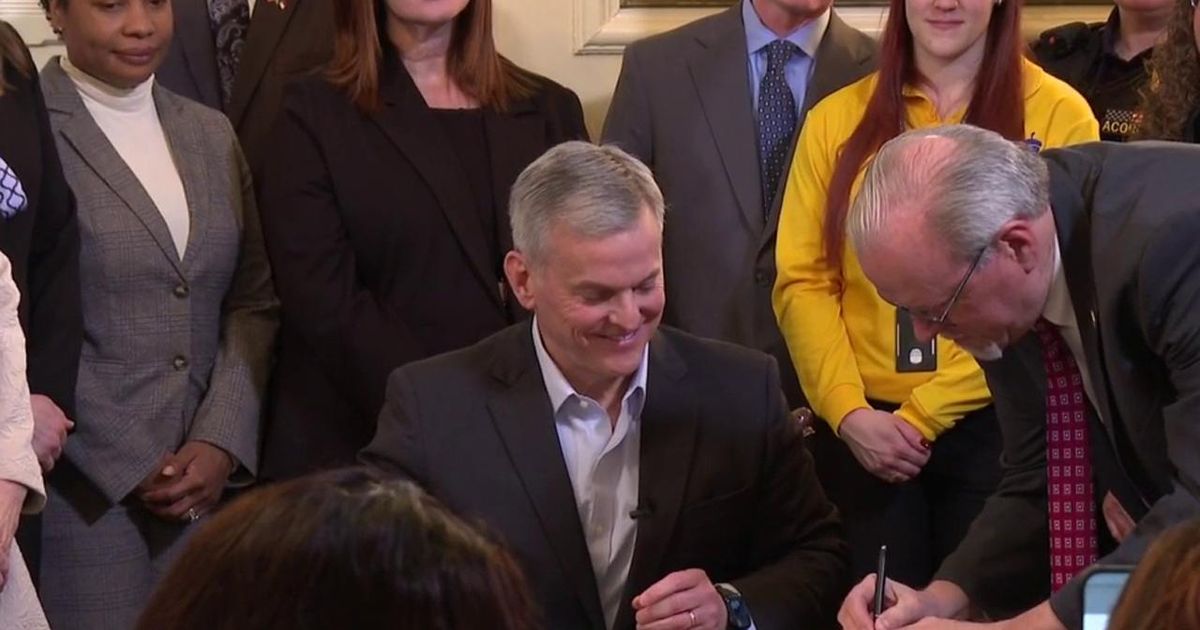
North Carolina Gov. Josh Stein on Thursday announced a new executive order aimed at creating new strategies for better coordination between the state’s behavioral health and criminal justice systems.
Stein laid out the details during a morning news conference at the governor’s mansion, surrounded by doctors, law enforcement officers, prison officials and state lawmakers of both political parties.
Stein referenced recent killings in Charlotte, Raleigh and Southport that police say were committed by people with histories of mental illness.
“Our system needs to work better,” he said. “Better for the people who are suffering, better for the people around them, and better for the entire community.”
Stein said one of the key goals of his new executive order is to bolster the state’s ability to involuntarily commit, and treat, people with dangerous mental health problems. The order notes that, according to a federal government analysis, 97 of the state’s 100 counties have a shortage of mental health care access — and that state officials believe only about 13% of North Carolina’s mental health needs are being addressed.
Another focus, Stein said, is that when people are arrested and may need mental attention, police ought to be able to hand them off more quickly so they can get back out on the street fighting crime.
Nearly half of all 911 calls are not made to report crimes, Stein said, but rather are made by people near someone undergoing a mental break and who are calling to request help. Plenty of times those people don’t need to be arrested, he said, but police need to respond anyway. He envisions a scenario in which law enforcement agencies will have social workers on hand who can ride along with them to those calls. It would decrease the chances of the encounter turning violent, Stein said, and help free up the officers to get back out and responding to the 911 calls that are about crime.
Law enforcement officers receive some training in crisis intervention. “But they’re not a social worker who has had an entire professional education on how to deal with people in these situations,” Stein told reporters after announcing the order. “So when we can marry counseling with law enforcement, that’s when we’re going to get the best result.”
Jeff Smythe, who leads the Department of Public Safety, has personal experience in running that kind of setup Stein envisions going statewide. He previously served as the chief of police in Burlington, where his department had social workers. It made a big difference in ensuring that people actually got the help they needed instead of just being hauled off in handcuffs, he said Thursday.
“Over about a three year period, I think we took two people to jail,” Smythe said of those mental health calls. “When the [social work] responders showed up on scene, we identified the mental health issues, and we didn’t arrest people.”
Smythe co-signed Stein’s idea to spread the strategy statewide. He said the new executive order will help his employees and other state workers coordinate better and improve safety for everyone.
“Public safety and behavioral health are deeply connected,” Smythe said. “When our behavioral health system is strong, coordinated and accessible, everyone is safer. When it isn’t, law enforcement and correctional systems are left to fill gaps they were never designed to handle.”
But while the governor can order state agencies to take on new roles or strategies, he can’t authorize any funding. That requires action from the state legislature. But while the Democratic governor and Republican-led legislature have often been at odds, this is one area in which they broadly agree, and Stein said Thursday he’s already been in talks with legislative leaders about helping fund his plans.
“We’re increasing the state’s capacity to handle involuntary commitment petitions,” Stein said. “I’m counting on the General Assembly to partner with us in this work. I’m grateful to see so many legislators here today.”
In a written statement Thursday, a spokeswoman for House Speaker Destin Hall said the chamber is prioritizing public safety and mental health but made no commitment to help with Stein’s plans. Demi Dowdy, the Hall spokeswoman, highlighted recent legislative efforts, including the passage of a package of laws that require judges and magistrates to order mental health evaluations for people charged with violent crimes. And she said a House committee focused on involuntary commitment and public safety “will continue to explore ways to help the state address severe mental illness before it escalates into harm to others.”
A spokesperson for Senate leader Phil Berger didn’t immediately respond to a request for comment.
Violent acts in focus
Stein kicked off his press conference noting that most people with mental illness are not a danger to others, but that a small number are and need more attention to prevent violence like the killings he referenced.
The victim in the Charlotte case was Iryna Zarutska, a Ukrainian immigrant whose stabbing death on a commuter train led to new laws related to mental health and the criminal justice justice system. The victim in the Raleigh case was Zoe Welsh, a teacher who was beaten to death in her home.
Their accused killers, Decarlos Brown in Charlotte and Ryan Camacho in Raleigh, were homeless at the time of the killings, authorities say, and have long criminal histories. Media interviews with family members and public records indicate that each had severe mental illnesses — and that family members spent years trying to get them help as they bounced back and forth between jail, prison and society.
Republican state lawmakers have responded to the killings by accusing Democrats — who control Raleigh and Charlotte city governments — of being “soft on crime.” After Zarutska’s 2025 killing, the legislature passed what sponsors titled “Iryna’s Law,” a set of changes attempting to bring back the death penalty and end cashless bail.
Stein and other Democrats criticized GOP leaders for doing nothing to address the root problems of crime and mental illness to try stopping similar crimes. The new law contained no additional funding for mental health services or law enforcement. Last month, Stein called on the state’s prison system to continue boosting efforts to help ex-inmates become productive members of society, noting that nearly everyone who goes to prison will one day be released.
Stein has cross-crossed the state in recent months to hear recommendations from mental-health professionals and law enforcement officials and community leaders. “We’ve got to do more to get people the health care they need before something bad happens,” Stein said in a statement last week after visiting a behavioral health center in Alamance County.
State lawmakers haven’t passed a new state budget, which has left state-run mental hospitals running on outdated spending plans.
Stein has urged Republican legislative leaders to approve a $195 million proposal that would allocate funding to address law enforcement staffing shortages. He also is pressing lawmakers to provide more funding for Medicaid and mental health care.
Mental hospitals have long suffered from staffing shortages, due in part to low state employee pay, which has meant that many people seeking help — or committed against their will — have been turned away, or sent to stay in jails or emergency rooms for weeks or months at a time.
Another part of Iryna’s Law, seeking to increase the rate at which accused criminals are evaluated for mental illness, has been put on hold as hospital executives and county sheriffs fight over who should oversee those evaluations.
The new law requires that certain defendants — those who have undergone an involuntary commitment within three years of their arrest for a violent crime, or who judicial officials believe to be a danger to themselves or others — must be transported “to a hospital emergency department or other crisis facility” for a psychiatric evaluation.
The mandated location of those evaluations is at the center of the debate between the hospitals and sheriffs.
Hospital leaders say they don’t want the suspects evaluated in emergency departments because they could endanger patients and hospital staff. Instead, hospital leaders suggest conducting the evaluations in jails. Sheriffs oppose that idea, saying hospitals are more appropriate settings for evaluating someone’s health.
link