How Much Retinol Is Too Much Much Retinol?
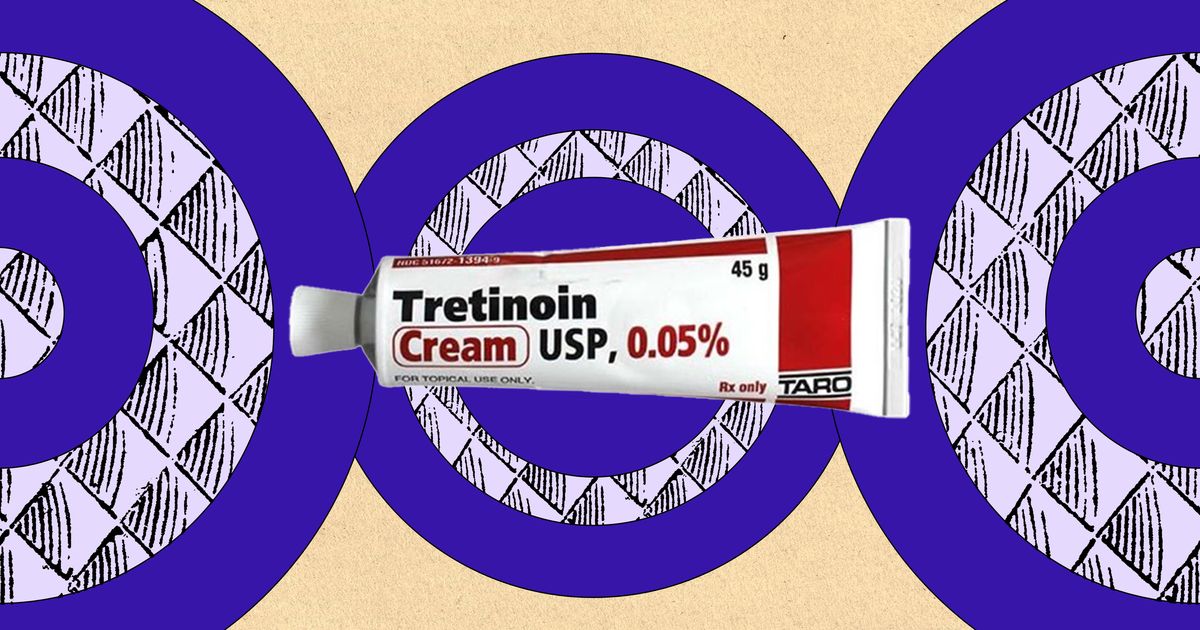

Photo-Illustration: The Strategist; Photo: Retailer
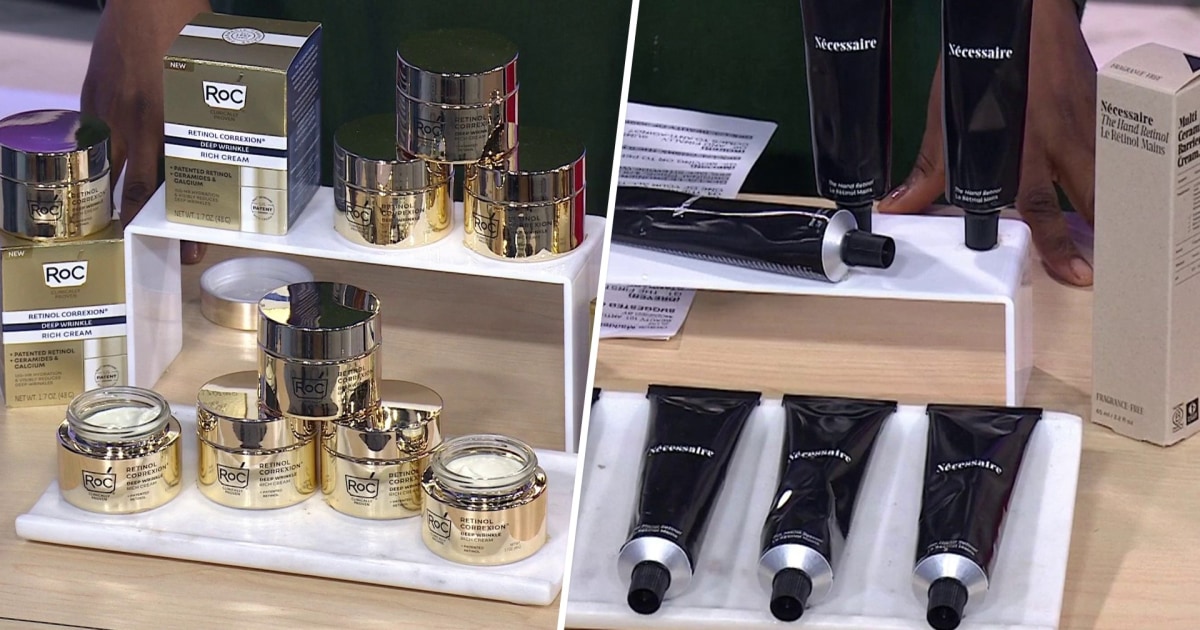
At one time, retinol was largely available via prescription, a functional and unsexy cream at the back of the medicine cabinet, but over the past decade I’ve watched it slip into most skin-care routines and extend beyond the face and neck. Now I can find it in just about anything — from bodywashes to lip balms to hand creams. I get why everyone’s hopping on the retinol train; the benefits are documented and visible. By speeding up cell turnover, skin improves overall, clearing up dark marks and filling in fine lines. It stands to reason that people want to use the strongest formulations possible to get the biggest benefit, or slather it everywhere in an attempt to mimic the results they’re seeing on their face. But is there a point where it gets to be too much? Is more better? How do you know when to stop? I asked three dermatologists to find out.
A quick refresher: Retinol is a vitamin-A derivative that breaks down into retinoic acid in the skin, interacting with cells to increase turnover and collagen production. Cell turnover happens naturally every month or so but slows down as you age (around your mid-30s). This slowdown results in an increased buildup of dead skin cells, which shows up as uneven skin tone, hyperpigmentation, and acne. We’ve written a more in-depth explanation about this, which you can read here, but essentially, by increasing turnover rate, retinol generally improves skin’s look and feel.
The biggest concern about incorporating lots of strong retinols into your routine at once is the possibility of hypervitaminosis A, or vitamin-A toxicity, which causes headache, vomiting, nausea, bone pain, and even liver damage at extremes. Dermatologist Dr. Melanie Palm says this is extremely unlikely, especially if you’re using a face cream and a bodywash. “Most body formulations have a low enough retinol that I don’t worry about systemic absorption,” she says. This is typically a concern if you ingest amounts of vitamin A (as supplements and isotretinoin), which doesn’t apply to skin care. In skin care, “too much” is a matter of frequency of use and formula concentration, which we’ll address below.
Generally, yes. However, retinoids (retinol is one gentle type of retinoid) are notoriously sensitizing, so you don’t want to jump in and start using them everywhere nightly. All the derms I spoke to recommended using a product a few times a week at first and working up to nightly over time. This is a rule of thumb for anywhere you use it — from face to body to neck.
While Palm does recommend using a body-specific formulation, that’s mostly to minimize the chance of irritation that can come from a high-concentration retinol. Body retinols tend to be lower in strength than the stuff you use on your face, especially if it’s a prescription retinoid, so you’re less likely to experience excessive peeling or redness. If you don’t want to spring for a body retinol, Palm suggests mixing a few pumps (or drops) of whatever you’re using on your face into your body lotion before applying.
Palm says a retinol you can buy over the counter is “probably fine.” (This is true for both body and face applications.) Still, if it’s your first time trying the ingredient on a new area, she recommends starting with a lower concentration, like 0.025 or 0.05. If you’re more experienced, she says you can go up to 0.1 and see how your skin reacts.
The vehicle also matters, says Palm. Some formulas use technology like encapsulation, to ensure the retinol stays effective, or microspheres, which create a slow-release effect that delivers the actives to skin over time. The slower release tends to be less irritating because skin has more time to adjust. You should look for products with additional skin-supporting ingredients like hyaluronic acid, glycerin, or squalane, which help support the skin barrier and mitigate some of the more irritating effects.
To start slow, I recommend using a product like the Olay Cleansing & Renewing Nighttime Body Wash with vitamin B3 and retinol. Since it washes off in the shower, the ingredients have less time to interact with the skin barrier, which minimizes the chance of irritation.

For your face, dermatologist Dr. Karan Lal recommends treating the retinol hierarchy like a ladder, starting with a retinol (the weakest form of a retinoid) and using it for about six months to see how your skin adapts. Apply it only a few nights a week before moving up to a nightly application. Once your skin has fully adjusted, you can move up to a retinaldehyde, like Medik8 Crystal Retinal, repeating the same cycle as before. Depending on how your skin does with that, you can transition to the next level, a prescription-strength retinol like tretinoin, starting at the lowest concentration and going up from there. “The goal is to keep going until you can’t tolerate it,” says Lal. “Think of it like progressive overload for the skin.” Tolerating a retinoid means your skin is no longer peeling or flaking, a common side effect in the early days of a new retinol or stronger concentration. (For the body, you likely won’t need to increase to maximum-strength levels, but more on that below.)

Retinoids have been around for a long time and are typically prescribed and designed for the face, so the concentrations tend to be more specific and spelled out on the packaging. It can be a little less clear with body products, which typically include retinol without listing the concentration. If you’re having good results with a bodywash we mentioned above and want to take things a step further, you can transition to a cream like the Naturium body lotion. If you want to really dial in on the concentration (or want something stronger), body serums are your best bet. The Naturium Body Retinol, which also contains AHA, and the Paula’s Choice Skin-Smoothing Body Treatment both have a concentration of 0.1 percent. You probably don’t need to go much higher than 0.1 percent because there tend to be fewer signs of aging on the body.


The signs may look similar, but you’ll be able to tell. According to dermatologist and dermatologic surgeon Dr. Lauren Moy, some peeling and mild redness is normal, but it shouldn’t be much more than that. “If your skin becomes painful, red, itching, or burning and irritated, it’s too much,” she says. “It should not be torture.” Time is also a factor. If after two months of using it a few nights a week, you still experience mild irritation, it’s a good indication that it’s too strong or that the product isn’t working for your skin. If your skin tolerates it for a few nights a week but not nightly, that’s a sign you should stick to that concentration for a few nights a week or go back down a step and use the lower concentration nightly.
No, it’s not. “Too much” generally looks like too frequent application or too high a concentration. The key is that everyone is different, so it’s not guaranteed that you’ll continue to move up to the highest available retinoid, and don’t aspire to. It’s possible your skin can tolerate tretinoin only at, say, 0.025 percent, not .1 percent. You’ll be able to tell because your skin won’t fully adjust when you move to the next level. Says Lal, “That’s your body telling you your previous strength is the concentration you should stick with.”
See All
The Strategist is designed to surface useful, expert recommendations for things to buy across the vast e-commerce landscape. Every product is independently selected by our team of editors, whom you can read about here. We update links when possible, but note that deals can expire and all prices are subject to change.
link