New skin care products claim to address an infamous GLP-1 side effect. Do they work?

Sign up for the Slatest to get the most insightful analysis, criticism, and advice out there, delivered to your inbox daily.
The use of GLP-1 medications to lose weight may have solved one body-image issue, but in exchange it seems to have introduced a new one. Meet “Ozempic face,” the extremely tactful name for a set of cosmetic side effects that includes sagging skin, sunken eyes, thin lips, deeper wrinkles, and a more gaunt appearance. The phrase is actually a misnomer—Ozempic face can happen to anyone who experiences rapid weight loss for any reason at all. But GLP-1s are so effective and so speedy that, as they’ve revolutionized weight loss, more and more people are winding up in plastic surgeons’ offices, trying to reclaim the youthful face they traded to get rid of the extra pounds.
Problems with skin, you say? The skin care industry, never one to shy away from inventing an entirely new genre of must-buy items, is on the case! In the past several months, numerous products have been launched in the name of treating GLP-1 side effects. There’s Image Skincare’s VOL.U.LIFT™ GLP-1 4D Skin Rebound Complex, which, at $134, “works in 4D to address specific skin concerns that occur with GLP-1 usage to improve the appearance of facial skin,” and Dr. Few’s DermaReverse™, a “revolutionary” treatment designed specifically for GLP-1 users and coming in hot at $300 for 30 milliliters. Other companies have opted to release less-niche products that can still be marketed toward GLP-1 patients, such as SkinCeuticals’ new A.G.E. Interrupter Ultra Serum, which costs $185.
Do these products do anything special? Experts are skeptical—for starters, because these items offer nothing new. The effects of Ozempic face, from sagging skin to wrinkles, are also side effects of the fun universal experience called aging. “They’re kind of ordinary skin concerns,” says cosmetic chemist Valerie George. In other words, these are the things that skin care products have been treating forever. If a new demographic of consumers need to upgrade their routines, they could have turned to the $50 billion–plus antiaging skin care industry. But no one knows how to exploit a market hole like a beauty brand, so it’s no surprise that GLP-1-specific serums and moisturizers have rushed in to fill the void.
Each of these new products cites GLP-1-focused clinical trials—usually a good sign when it comes to skin care. (Clinical trials are expensive to run, so it’s often the more resourced companies that are able to invest the money to test their products.) SkinCeuticals, for instance, is generally highly regarded for its R&D, says George: “If they are making a claim, they probably have done the due diligence to prove it.”
However, these trials tend to be proprietary, and it’s easy enough for companies to optimize for certain results or market the product to make the results sound better than they are. For instance, on SkinCeuticals’ A.G.E. Interrupter Ultra Serum product page, it’s emphasized that users saw 18 percent visible lifting—but when you look more closely at the trial, this result was noted by just one-third of the 76 testers (a sample size that, it’s worth mentioning, is pretty good for these kinds of studies). The average result across all testers was a more modest 7.6 percent. “All subjects kind of had a tiny bit of improvement, but they try to make it look more impressive by saying, ‘Well, a third showed a lot of improvement,’ right?” says George. “So that’s where the marketing piece comes in.”
The experts I spoke to emphasized that the dermatologic effects of GLP-1s are likely the result of rapid weight loss. But there’s some uncertainty about whether the meds also affect skin quality. It’s the claim made by plastic surgeon Julius Few, of DermaReverse: that GLP-1 drugs affect “skin biology” in such a way that users need something different from normal skin care, a product like—I’ll just make a wild guess—DermaReverse. The (publicly available) study that the product is based on isn’t too compelling, for several reasons. The sample size is a teeny-tiny seven people, way too small a group from which to draw a significant conclusion. It didn’t compare the GLP-1 users with a control group that wasn’t taking the drug, meaning that the product could be just as beneficial to nonusers. Not to mention, Few was, at least until 2022, an editor at the journal. All reasons to be skeptical of these findings.
Still, researchers are looking into the idea that other mechanisms could be behind Ozempic face. For instance, one study concluded that GLP-1 drugs cause certain stem cells to behave differently—in particular, the ones that produce collagen and elastin, which are important skin boosters that are diminished by rapid weight loss. This might indicate that treatments targeting those stem cells could be useful for GLP-1 patients, explains cosmetic dermatologist Sabrina Fabi; indeed, another study with an injectable that does just that has shown promising results. Interestingly, GLP-1 medications are known to affect skin quality in at least one beneficial way. Because the meds inhibit glucose spikes, which can cause inflammation, they can help clear up skin, particularly for people with preexisting inflammatory conditions like psoriasis. In short, there are lots of things going on beneath the surface, good and bad, that researchers are still trying to figure out.
This whole marketing ploy reminds me of an animated short I saw recently. A hotel patron finds a mouse in his room and calls the front desk for assistance; the front desk sends a cat to take care of it, but then the cat is being a nuisance. So the front desk sends a dog, and so on and so forth, until it sends an elephant—the solution for the elephant, of course, is sending in a mouse. Ridiculous, right? But we see this all the time in the beauty industry: Society tells us that fat is bad so it’s crucial to lose weight, but not too much weight, or your face will look gaunt and old, which is also bad, but don’t worry, you can buy something else that fixes that new problem! It’s the famous Barbie monologue, monetized: You can’t hit every beauty standard, but, Lord knows, someone will make a profit off your desire to do so.
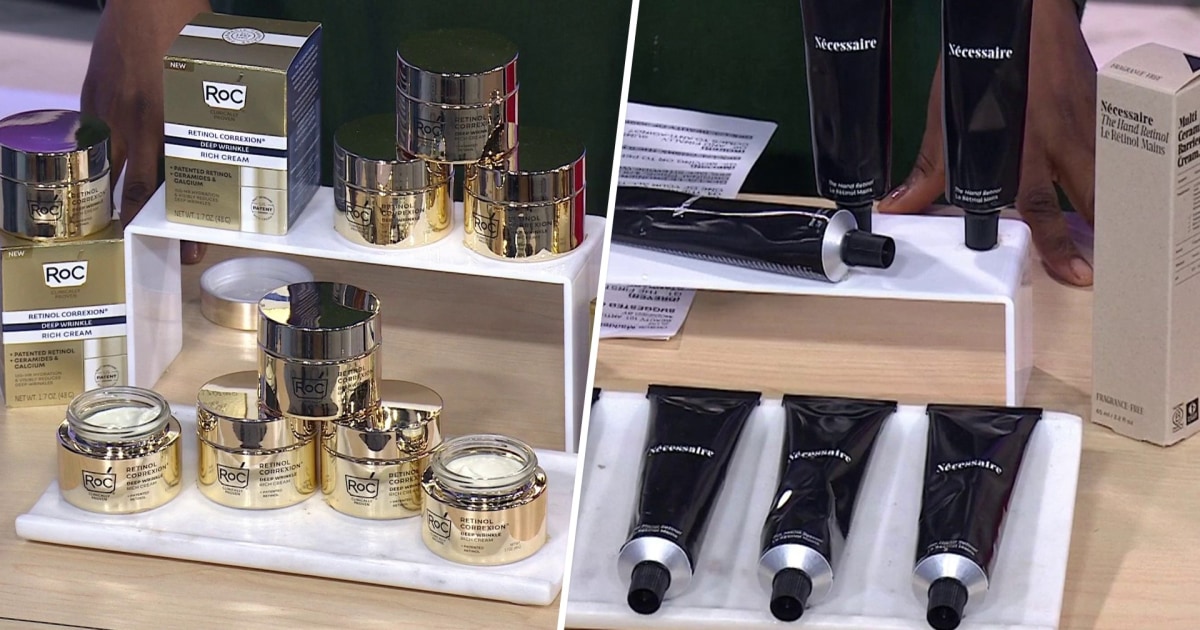
While it’s upsetting that these GLP-1-specific skin care products are nothing new, it also means you can avoid falling prey to this marketing trickery. Because, overall, if you’re thinking about going on a GLP-1 medication, doctors do recommend starting a good skin care routine. “I’m a big proponent of ‘Definitely work on skin care on Ozempic,’ ” says Justine Lee, a facial plastic surgeon specialized at the University of California, Los Angeles. “You should work on skin care with or without Ozempic, but especially on Ozempic, because you’re going to see a lot of changes really quickly.” But choose products based on what they do, not whether they’re marketed for GLP-1 drugs. George and Lee recommend looking for ones that advertise hydration (hyaluronic acid should be on the ingredient list) and promote collagen (look for peptides). Exfoliating acids and retinoids are helpful for addressing fine lines and wrinkles. Sunscreen, too, is always important. And moisturizer. “But you don’t need special skin care,” says George, “because almost all moisturizers will do those benefits.”

link