


Exorbitant out-of-pocket costs, outright claim denials, even AI-bot responses are just a few of the pain points for healthcare providers and patients trying to access healthcare insurance in the Southeast Valley and Arizona.
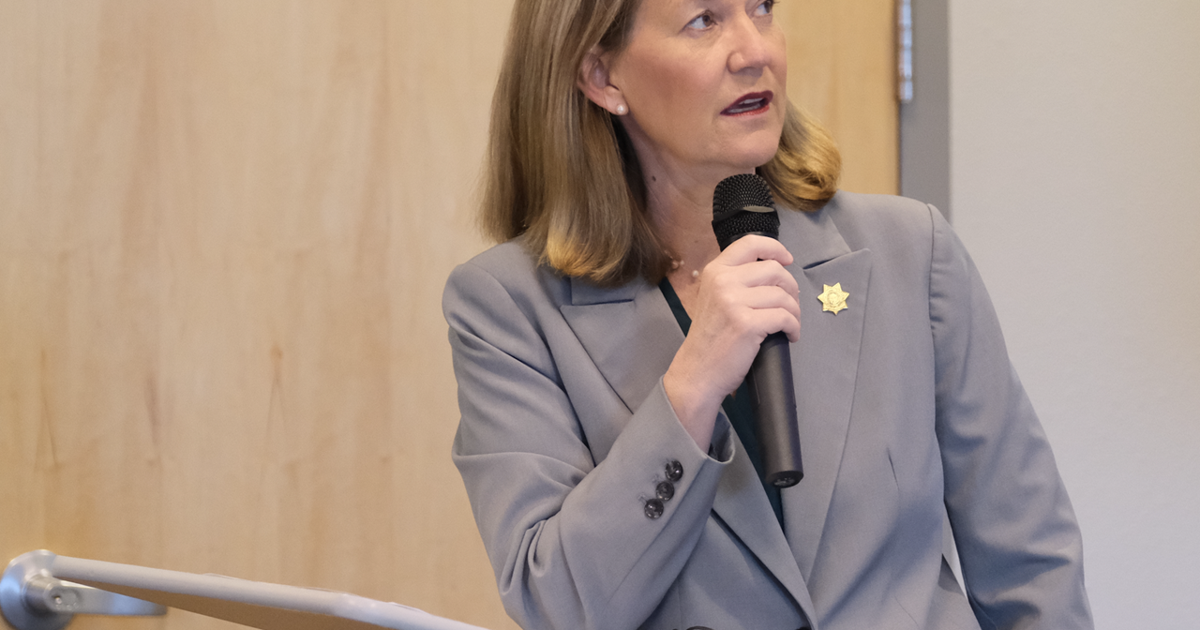
And they brought their complaints Sept. 15 to state Attorney General Kris Mayes at a town hall in Gilbert as she held the first of several “listening sessions” about a subject she may take action on.
“From the stories that Arizonans have shared with the public, we are concerned that some health insurance companies may be participating in potentially unlawful practices,” Mayes stated in announcing the sessions two weeks ago.
Last week, patients and healthcare providers at the Southeast Regional Library laid their frustration and anger as they share their trials in battling insurance companies for their medical claims.
According to data gathered by the Attorney General’s office, in 2023, the national average for denying in-network claims was 19%. In Arizona, the average rate of such denials is 21%, Mayes said, with these denied patients having to cover the medical costs out of their own pocket, or worse, forgo care altogether.
Many of those patients fall into deep medical debt or file for bankruptcy trying to cover their bills.
Mayes said she has had family members denied claims for life-saving, critical procedures.
“Another reason that, quite frankly, I’m personally interested in this, is about my family and some things that we discovered in the course of my mother and my sister and both of my maternal grandmothers having been diagnosed with breast cancer,” she said.
Mayes said that her sister was denied insurance coverage in California for a deep flap surgery, a highly specialized surgery to reconstruct breast tissue after a double mastectomy.
“It’s micro surgery, and many insurance companies in this country do not cover that microsurgery, even though many doctors believe that it is the healthiest and most appropriate way to go about breast reconstruction,” she said.
While caring for her sister, Mayes said that she witnessed several women at a healthcare facility being told that their insurance did not cover the surgery.
Dr. Kenneth Mishark, an internal medicine consultant at Mayo Clinic in Phoenix, said that he and his staff spend a significant amount of time fighting with the insurance companies on behalf of their patients, losing time that could be spent for their medical care instead.
Kasey, a healthcare analyst, said securing the right medication for her daughter’s rare medical conditions has been an uphill battle.
“My daughter has had three spine surgeries. She suffers from rare diseases, and there’s only one medication that helps with this one particular one she’s got, it’s called idiopathic hypersomnia, she can’t sleep,” she said.
She said her employer switched insurers and ran into an expensive wall.
“Even though we’ve gone through enormous headaches to get it finally approved and found that it works, it will not approve it with this new insurance. It’s $12,000 a month from our pocket. We can’t do that, but she can’t survive.”
Dr. Brittany Panico, a rheumatologist from Gilbert, pointed out the appeals process for the claim denials is extremely flawed, delaying necessary care and medication from reaching patients.
For one of her patients, her team has been appealing since last October. After the third appeal, they had to wait for 180 days before putting in a request to authorize the required medication.
“I have hundreds of these stories, but specifically, a lot of our diseases cause disability if they’re left untreated,” Panico said. “Patients are paying for health insurance and showing up to work and trying to stay in good jobs and support their local economy, and we just struggle.”


Patients and medical providers brought their tales of anger and frustration to the Southeast Regional Library in Gilbert last week for the first of state Attorney General Kris Mayes’ “listening sessions” on health care insurance denials.
Mary Alice Theroux, 83, previously owned an insurance agency, and said that her late husband, a Vietnam war veteran, had a genetic kidney condition that both her sons inherited.
When her sons required kidney transplants, Theroux said she took the tough decision of paying the medical expenses out of pocket instead of fighting with the insurance companies.
Theroux sold her agency and her two-bedroom home to pay those medical costs and lives today in a mobile home in Gilbert.
At one point, she even began a GoFundMe campaign for $35,000 to cover some medical expenses.
“To make a long story short, I have spent all of my money seeing that my children were taken care of and my family’s taken care of,” Theroux said.
“I moved into a double-wide level home because when you spend all your money, you downgrade – you do what you need to do,” she said.
Nancy Higgins, who works at Gilbert’s sports medicine practice Pioneer Sports & Spine, said that since the end of 2024, Cigna Medicare has denied 80 claims from their office.
And when she called to appeal these denials, she was told that no record of the claims exists. But when the office submits a fresh claim, it is denied after being flagged as a duplicate.
“I personally believe it was a bot or an AI program that just didn’t see any of those claims, and then immediately, when a plan comes in, it sends it back, even though they say there was no original claim that was sent,” she said.
She also said that insurance companies only allow providers to talk about three claims in a call, taking away time from helping patients.
A 65-year-old woman told Mayes that all her claims in the past year with Athena Healthcare were denied and only after she had filed a complaint with the Better Business Bureau, were those claims were approved.
Dr. Stefanie Brichta, a child and adolescent psychiatrist at Valleywise Health, said that the companies deny claims by stating that the provider has to “demonstrate” or provide specific evidence that the patient needs that care – often not in line with the medical diagnostic criteria.
“For one of the claim denials, we got told that we needed to demonstrate that the patient was forgetting to keep herself safe or forgetting to eat healthy food – which makes no sense because that is not why we’re recommending it. We’re not recommending higher levels of care because they’re forgetting to eat healthy food, that’s ridiculous,” she said.
A breast cancer survivor said every step of her diagnosis and treatment was littered with claim denials for bogus reasons.
She had gone to the hospital because, like many cancer patients, she had a low white blood cell count.
“I ended up in the hospital on April 8; on April 9, I got a letter from Aetna stating ‘You’re denied, you had a stomach ache, you should have gone home’ – I almost died that night,” she said.
Jennifer Garcia, a revenue cycle manager for Scottsdale Recovery Center, an addiction treatment facility, said that in her dealings with denial appeals, only the second or third appeal goes to an actual agent, raising her suspicions that AI bots handle the first two.
Lee Yaiva, the CEO of the same center, noted that much of their operations are supported by grant funding and due to these claim denials, the center is not getting reimbursed for the services they render.
“When they institute some of these new things, like the pre-authorizations, we’re doing that, we’re meeting that expectation. But again, they’re still not reimbursing us for services granted,” he said.
Many of the center’s patients are on the American Indian Health Plan, which many medical providers already don’t accept.
Dr. Ariana Peters, an internal medicine physician from Mayo Clinic, stated that actual change with these processes could only come through hard evidence.
“I hear a lot of legitimate emotion in this room, a hundred percent, but an emotion is something that helps us to tell stories. However, what we need is facts because facts are what actually make changes at a governmental level,” she said.
She urged everyone present to look at reports from Becker’s Hospital Review, a hospital business news magazine, to understand the insurance systems in the nation.
Mayes, after listening to all concerns, said that her office has already opened an investigation on this and will be looking into filing a lawsuit under the Arizona Consumer Fraud Act.
“I think some of the things that you have described tonight fall under this law and would be, if proven to be true, we have no reason to believe that any of you are not telling the truth, would violate the Arizona Consumer Fraud Act,” she said.
The act, passed in 1967, allows her to prosecute businesses for unfair or deceptive acts or practices, misrepresentation, fraud, false pretense, false promise or concealment, suppression or omission.
Mayes also assured the audience that she intends to bring up the AI angle of the claim denials with her counterparts in other states.
“I think it’s, quite frankly, going to be interesting to other attorney generals across the country. I anticipate we’re going to be attacking this frontally across the country again – but definitely here in Arizona,” she said.
link